
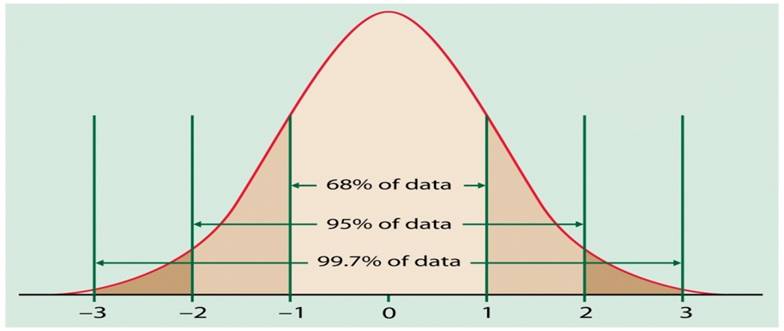
How much confidence should we have in the job numbers?

normal_curve

Statistics Canada reported that employment rose by 51,000 in February.

These numbers seem to gyrate tremendously from month to month in a way that has little to do with economic fundamentals: jumping by 40,000 in December, falling by 22,000 in January, and now rising significantly.

How much confidence should we have in them?

Continue reading “How much confidence should we have in the job numbers?”

Inequality and social mobility, an interesting discussion

Canada2020 event February 26 2013

“The idea that all citizens should have an equal chance to succeed in life, regardless of where they start, is fundamental to liberal societies and emblematic of the American—and Canadian—dream” is the way a Canadian think tank, Canada2020, introduces a panel discussion it hosted that explored the idea of economic mobility, why it is important, and how it is related to inequality of outcomes.

I was a member of the panel and had a very interesting—and at times humorous and entertaining—discussion with Zanny Minton Beddoes the economics editor of The Economist, Carolyn Acker the founder of Pathways to Education, and Ron Haskins a senior fellow at the Brookings Institution. You can view the entire discussion, which was moderated by Diana Carney, by clicking on the following screen shot (and waiting a bit for it to load):

The short presentation I made at the beginning of the talk is, if you are interested, available here: Equality_of_Opportunity_A_Canadian_Dream_for_Canada2020

I plan on revising the background document I wrote for the event—which you can download from the Canada2020 website—and would therefore be very pleased to hear your views on the discussion, and any specific feedback you might have.

Public policies for equality and social mobility

nov18-609x435

“Inequality matters. It matters because it has the potential to shape opportunity.”

This is how I begin the conclusion to a just finished paper that will serve as a background document for an event called “Equality of Opportunity—a Canadian Dream?” that will take place Tuesday evening, February 26th.

The event is organized by Canada2020, an Ottawa based think tank, and will take the form of a panel discussion moderated by Diana Carney and include as panelists  Carolyn Acker (founder of Pathways to Education), Zanny Minton Beddoes (the economics editor at The Economist), Ron Haskins (senior fellow at The Brookings Institution), and me.

The conclusion to my paper, “Public policies for equality and social mobility”, continues:

Continue reading “Public policies for equality and social mobility”

Social mobility and generational differences in income status in my family history

The February 9th, 2013 issue of the The Economist magazine featured an article on social mobility called “Nomencracy“, which discussed research on the lack of social mobility over very long periods of time in some countries. This engendered a good deal of discussion including an exchange of views I had with other academics on The Economist’s Free Exchange Blog, which is introduced here, and begins here.

But frankly the best correspondence I received on this was from a UK-based reader whose family origins are from Leicestershire, and who was kind enough to share his family history with me. His experiences vividly illustrate the challenges of upward mobility.  I am pleased to reproduce his letter to me with his kind permission.

His great-great-great-great-grandfather was a framework knitter.

frameknitters
Source: Wigston Framework Knitters Museum, http://www.le.ac.uk/emoha/community/resources/hosiery/museum.html

Continue reading “Social mobility and generational differences in income status in my family history”

Understanding inequality and why it is important

My presentation to the All Party Anti-Poverty Caucus of the Canadian House of Commons addressed three questions: (1) has inequality increased in Canada; (2) what explains the changes; and (3) why is it important for public policy?

I pointed out to the members of the Caucus that:

  1. Inequality has been rising in Canada since the early 1980s, driven by stagnant and declining incomes in the middle and lower half during the 1980s and 1990s, and rising top shares throughout the last 30 years.
  2. The tax-transfer system plays an important role in reducing inequality, but has not kept pace after about the mid 1990s.
  3. Rising inequality is a global phenomenon. The change in Canada has been above average when compared to other rich countries, and particularly notable for the increase in top shares.

I also suggested that while we might be interested in these changes because of a sense of fairness or because of concerns over economic efficiency, we should also be interested because inequality shapes opportunity, and that this may be a reason why all parliamentarians—regardless of their political allegiances—should treat it as an important issue for public policy.

You can download the English version here: Understanding_inequality_and_why_it_is_important_a_presentation_to_the_All_Party_Caucus

And the French version here: Understanding_inequality_and_why_it_is_important_a_presentation_to_the_All_Party_Caucus_en_francais

Three predictions for the January job numbers

corak-jobs

On Friday Statistics Canada will release its estimates of the January job numbers, and after about 20 minutes of statistical modelling, using fuzzy data, over a small glass of red wine, I am prepared to make three predictions, albeit with different degrees of confidence.

First, I am most confident suggesting that January’s job growth will be less than the 40,000 recorded in December; second, I am confident that it will be less than 21,000, which is the average monthly change during the recent past; and third, if I had to offer a single number, I’d say the economy added only about 1,700 jobs in January.

All three ingredients—the statistics, the fuzzy data, and the red wine—were important in making my forecast, but realizing the data are fuzzy was crucial.

Continue reading “Three predictions for the January job numbers”