The Great Gatsby: as Hollywood never imagined it

After much anticipation Hollywood finally releases its version of F. Scott Fitzgerald’s classic novel, The Great Gatsby.

Was Gatsby a crook? Or was he a victim of a crooked game, the American Dream as a broken promise?

In this program originally aired on CBC radio last August, Sarah Churchwell of the University of East Anglia, a professor of American literature and author of Careless People, interprets Fitzgerald as saying the American Dream is a lie.

But listen also for my reading of a few passages to appreciate, tongue-in-cheek, why the underlying economics suggest that The Great Gatsby is indeed a novel for our times.

If you want the movie version, and a detailed discussion of The Great Gatsby Curve, here is a lecture I had the honour to give earlier this year at the University of Lethbridge on the invitation of the Prentice Institute and its Director Susan McDaniel.

I have to admit, however, the Hollywood version looks somewhat more exciting!

Some less than supportive comments on my Temporary Foreign Workers article make me wonder about economic literacy

Some comments on an article I published in The Globe and Mail about Canadian immigration policy,  Canada’s version of the guest worker programs used in some European countries, are just astounding.

My analysis is based on nothing more than a simple demand and supply model of the labour market to argue that this program amounts to a wage subsidy. Since it does not seem to address any clear market failure it likely promotes both inefficiency and inequity.

Continue reading “Some less than supportive comments on my Temporary Foreign Workers article make me wonder about economic literacy”

How will the House of Commons look at Income Inequality in Canada?

Screen Shot 2013-04-23 at 9.56.24 PMEveryone has been talking about it: academics for at least a couple of decades; think-tanks and international organizations like the OECD and the IMF as well; and even—at least since the Occupy Wall Street movement went camping—the average taxpayer.

And now, after having adopted a motion introduced almost a year ago by Scott Brison, the honourable Member of Parliament for Kings-Hants, the House of Commons has charged its Standing Committee on Finance to also talk about it: yes, Virginia, Committee hearings on “Income Inequality in Canada” have begun.

Can there be a topic that is least likely to garner consensus among our Members of Parliament than taxes and inequality? Little wonder they are so late to the conversation.

On Thursday the Committee held the second of at least three hearings. Among its terms of reference is to “examine best practices that reduce income inequality and improve per capita gross domestic product.” If the written briefs posted on its website and some of the witness statements to date are any indication, the Committee has its homework cut out for it. At first look these are lofty of principle, short on prescription.

Continue reading “How will the House of Commons look at Income Inequality in Canada?”

Tax policy for equality and social mobility

The Canadian House of Commons has charged its subcommittee on Finance to examine income inequality in Canada.

More specifically the Committee’s mandate is to produce a report that will:

  • review Canada’s federal and provincial systems of personal income taxation and income supports;
  • examine best practices that reduce income inequality and improve per capita gross domestic product;
  • identify any significant gaps in the federal system of taxation and income support that contribute to income inequality;
  • identify any significant disincentives to paid work in the formal economy that may exist as part of a “welfare trap;” and
  • provide recommendations on how best to improve equality of opportunity and prosperity for all Canadians.

Its website contains the written submissions received by the April 5th deadline.

I will appear as a witness in a televised hearing beginning at 8:45 EDT on Thursday April 25th, 2013.  The other witnesses slated to appear at the same meeting are listed here.

You can view it all here as Meeting 116 if you have an interest.

A copy of my written submission is available as a pdf: Corak_Submission_to_Finance_Committee.

Citizenship as a privilege or as a right: should children be given the vote?

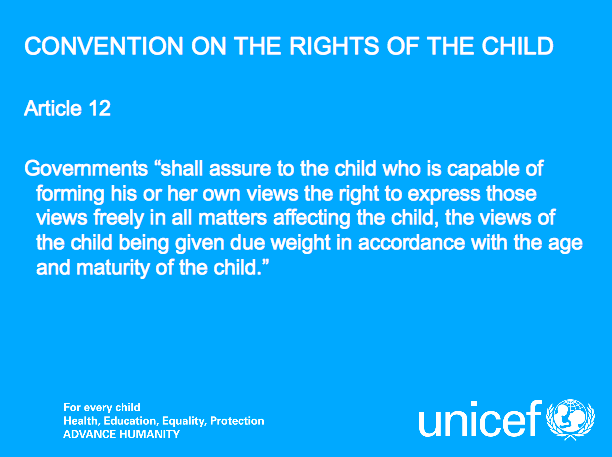
Article 12

At the TEDxWaterloo 2013 Event called chasingHOME I extended an invitation to participate in a conversation about a “crazy” idea: children should be given the vote. Here is the text of my presentation.

Continue reading “Citizenship as a privilege or as a right: should children be given the vote?”

Inequality: for the 10th grader in you

Hi my name is Z… and I am in 10th grade, I have a history project relating to economic inequality and social justice. I found your blog on economic inequality online and I was wondering if you could answer my interview questions, the questions are — What has happened to make economic inequality relevant in Canadian history? and To what degree has a commitment to social justice been significant in creating Canada today?

Continue reading “Inequality: for the 10th grader in you”