The sad, sad story of the UNICEF Child Poverty Report and its critics

David Morely, UNICEF Canada’s Executive Director, has just issued a bold challenge. “It is clearly time for Canada to prioritize children when planning budgets and spending our nation’s resources, even in tough economic times,” says a press release announcing the publication of a report on child poverty.

In fact, the UNICEF Innocenti Report Card released today is the 10th in a regular series on child poverty in rich countries, each report hitting the headlines every second year or so.

Sadly, when it comes to discussions of child poverty kick-started by these reports there are two things that are not new: the conclusions; and the reaction of pundits and many policy makers. I say “sadly” because the two are not linked, and public policy discussion is not the better.

Continue reading “The sad, sad story of the UNICEF Child Poverty Report and its critics”
Social mobility and inequality in the UK and the US: How to slide down the Great Gatsby Curve

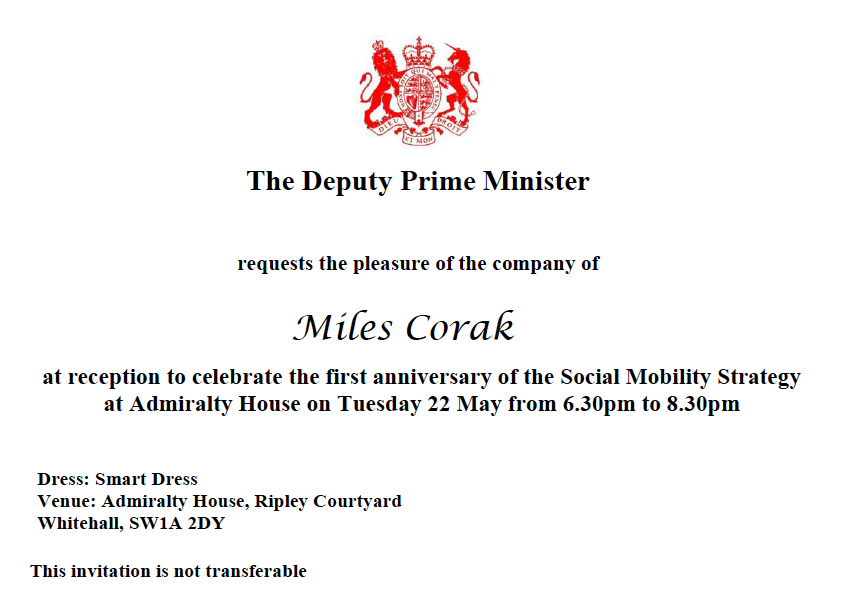
In a speech given this morning to announce an update on the government’s Strategy for Social Mobility, Nick Clegg, the Deputy Prime Minster of the United Kingdom, said that “We need an open society where people choose their place”; he said that “The effect of social class and class attitudes on Social Mobility are the ghost in the machine.”; and, in summary, he said that “We are a long distance from being a classless society”.

Yet in the same breath, he also said that it is a myth to suggest that reducing inequality will promote social mobility.

This is surely an inappropriate representation of the role of inequality in determining opportunity.

Continue reading “Social mobility and inequality in the UK and the US: How to slide down the Great Gatsby Curve”

Inequality and Occupy Wall Street 8: causes of growing inequality and policies to address it

This video of a panel discussion called “The Challenges of Growing Inequality” organized by the Kennedy School of Government at Harvard University features a discussion by Lawerence Katz, a prominent labour economist. Katz speaks on the causes of inequality and offers advice to Occupiers on what should be done about it.

Continue reading “Inequality and Occupy Wall Street 8: causes of growing inequality and policies to address it”

Inequality and Occupy Wall Street 7: tax policy for occupiers

Perhaps a bit more politely than others in the mainstream media, but nonetheless pretty emphatically, the Ottawa Citizen columnist Joanne Chianello tells Occupiers that it’s time to leave, and she offers some advice:

“I don’t know what the answer is to the growing income gap. Unfortunately, neither do the people at Occupy Ottawa or Occupy Toronto or Occupy Vancouver. They could have contacted a lefty economist (yes, they exist) to help frame specific policy issues or demands, but they didn’t. Perhaps that’s the protest’s “stage two” we keep hearing about.”

Contact a lefty economist!

Well, if economists are going to be at the centre of “stage two” why don’t we forget about “lefty” or “righty”, and just consult the “best”?

Continue reading “Inequality and Occupy Wall Street 7: tax policy for occupiers”

Diane Finley and Rebecca Blank meet Adam Smith: moving poverty lines are in

President Obama appointed Rebecca Blank—a capable, no-nonsense, PhD in economics, and a former Dean at the University of Michigan—to his new administration, and told her to answer a simple question: how should the United States measure poverty?

Diane Finley, the Conservative government’s Minister responsible for social policy, is not exactly Canada’s Becky Blank. She might certainly be capable, and she might certainly be no-nonsense, but to be honest she doesn’t seem to have a lot in common with the American academic turned policy-maker: except, of course, that in Canada Ms. Finley is ultimately the person responsible for poverty measurement.

Both women have pulled off quiet revolutions by recognizing that the poverty line should evolve over time: as the things needed to participate normally in society change, so should the poverty line.

Continue reading “Diane Finley and Rebecca Blank meet Adam Smith: moving poverty lines are in”