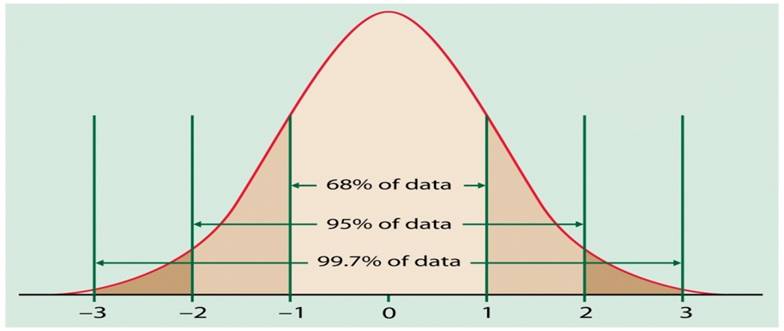
How much confidence should we have in the job numbers?

normal_curve

Statistics Canada reported that employment rose by 51,000 in February.

These numbers seem to gyrate tremendously from month to month in a way that has little to do with economic fundamentals: jumping by 40,000 in December, falling by 22,000 in January, and now rising significantly.

How much confidence should we have in them?

Continue reading “How much confidence should we have in the job numbers?”

Three predictions for the January job numbers

corak-jobs

On Friday Statistics Canada will release its estimates of the January job numbers, and after about 20 minutes of statistical modelling, using fuzzy data, over a small glass of red wine, I am prepared to make three predictions, albeit with different degrees of confidence.

First, I am most confident suggesting that January’s job growth will be less than the 40,000 recorded in December; second, I am confident that it will be less than 21,000, which is the average monthly change during the recent past; and third, if I had to offer a single number, I’d say the economy added only about 1,700 jobs in January.

All three ingredients—the statistics, the fuzzy data, and the red wine—were important in making my forecast, but realizing the data are fuzzy was crucial.

Continue reading “Three predictions for the January job numbers”

Why the rich don’t want to talk about inequality, and why the 99% do

Everything you need to know about why the rich don’t want to talk about inequality, and why the 99% do, is right here in this chart.

Average incomes and tax rates relative to 1982

The average income of those in the top 1% in Canada has about doubled since 1982, and for the top 0.1% it has increased by about two and a half to three-fold. But over this period the fraction of their income paid in taxes, their average tax rate, has remained about the same, and even a little lower.

Continue reading “Why the rich don’t want to talk about inequality, and why the 99% do”

Secure jobs on the rise in Canada, but the young are still shut out of the jobs market

Mr. Carney can’t push on a string. And he knows it.

His now famous comment labelling the stockpiles of retained earnings held by Canadian firms  as “dead money”, while perhaps being the most memorable quote of 2012, must also have been made out of a certain frustration that even this superstar central banker faces limits in his powers to push, encourage, and otherwise jumpstart business investment.

The Governor of the Bank of Canada knows that the flip side of dead money is insecurity in the jobs market.

Continue reading “Secure jobs on the rise in Canada, but the young are still shut out of the jobs market”

Why there are better ways to measure unemployment

The state of the jobs market is best assessed by a number that is not given enough attention by Statistics Canada, and the many media reports based upon its monthly press release.

The headline attention is all soaked up by the unemployment rate and the level of employment, when it really should be something Paul Krugman—the Princeton University economist and New York Times columnist—calls his “favorite gauge” of the employment situation.

Continue reading “Why there are better ways to measure unemployment”

How the invisible hand points students to a job

They are easy to spot. A certain glaze over the pupils; quick, frequent glances this way and that; puzzled pauses before adjusting course and setting out again in another direction: first year university and college students look so terribly lost during the first few days of school because, in fact, they are.

And quite understandably so: finding the right place to be at the right time is no small matter in a sea of thousands.

But surely the really difficult thing to figure out is not where you should be, but rather what you should be? Engineer or electrician? Anthropologist or accountant? Lab technician or teacher? Make a wrong turn in these hallways and you will pay for years.

Continue reading “How the invisible hand points students to a job”