An American idea about the Canadian middle class

The suggestion that the middle class is stagnating, the linchpin of Justin Trudeau’s economic platform—to the extent it exists—is an idea shamelessly borrowed from the United States.

Shameless it may be, but it is, nonetheless, true.

Clearly there are some ways in which we are all better off not withstanding what President Obama tells the American public, and notwithstanding how closely Canadian political leaders listen to him.

In 1980, a cell phone was something carried in a brief case; and a Sony Walkman—you surely recall the portable cassette player the size of a thick paperback that strapped “conveniently” to your belt?—was the cutting edge musical accessory.

But shops filled with more variety, and more quality, make us and our kids better off only to a degree, and not only because the power to blow your ear drums out has increased exponentially.

In 1980 middle-income Canadian families reported a total of $57,000 on their tax returns, and 30 years later, … well exactly $57,000.

Continue reading “An American idea about the Canadian middle class”
Income Inequality, Equality of Opportunity, and Intergenerational Mobility

The summer issue of the Journal of Economic Perspectives will feature a collection of articles on inequality and the top 1%, some of which are now being circulated by the authors.

The paper by Tony Atkinson and his coauthors, “The top 1 percent in international and historical perspective,” is available in this post, and “The Pay of Corporate Executives and Financial Professionals as Evidence of Rents in Top 1 Percent Incomes,” by Josh Bivens and Lawerence Mishel, is available on the Economic Policy Institute website.

Greg Mankiw has also posted a copy of his paper, “Defending the One Percent“, on his blog.

My contribution to the collection is based on the notion that the inequality literature has paid little attention to the intergenerational consequences of increasing top income shares, and it can be read as a counterpoint to Mankiw’s piece, or at least to his claim that inequality of opportunity is not a reason to worry about the top 1%.

Here is the final draft: Income Inequality, Equality of Opportunity, and Intergenerational Mobility. But if you just want a quick read, an excerpt from the conclusion follows. Either way, feedback is—as always—welcomed.

[NOTE added December 10, 2013: the published version of this paper is available from the American Economics Association website for the Summer 2013 issue of the Journal of Economic Perspectives, as is the table of contents for the entire issue.]

Continue reading “Income Inequality, Equality of Opportunity, and Intergenerational Mobility”

Should children be given the vote? Watch this TEDx talk.

I have offered a couple of posts on Demeny Voting, a way of recognizing that children have the right to vote. This post describes the scheme, which involves giving parents a proxy vote for each child under their guardianship. Chrystia Freeland recently wrote about this idea and its impact on inequality in The New York Times, and I offered another post with the text of my TEDx talk given in March 2013. Here for your interest is the video of that talk, very capably produced and edited by the team at TEDxWaterloo. As always, comments are welcome.

Citizenship as a privilege or as a right: should children be given the vote?

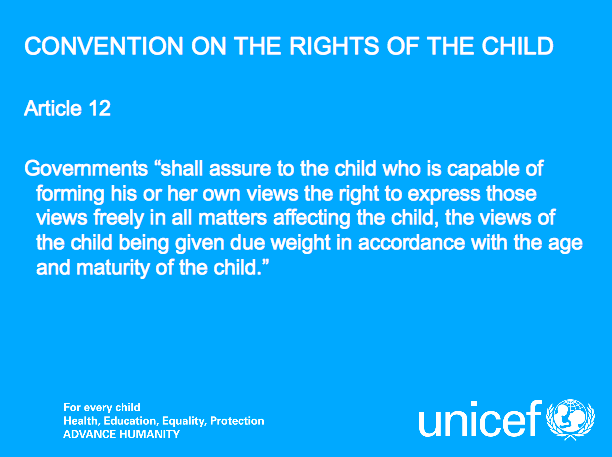
Article 12

At the TEDxWaterloo 2013 Event called chasingHOME I extended an invitation to participate in a conversation about a “crazy” idea: children should be given the vote. Here is the text of my presentation.

Continue reading “Citizenship as a privilege or as a right: should children be given the vote?”

Inequality: for the 10th grader in you

Hi my name is Z… and I am in 10th grade, I have a history project relating to economic inequality and social justice. I found your blog on economic inequality online and I was wondering if you could answer my interview questions, the questions are — What has happened to make economic inequality relevant in Canadian history? and To what degree has a commitment to social justice been significant in creating Canada today?

Continue reading “Inequality: for the 10th grader in you”

Public policies for equality and social mobility

nov18-609x435

“Inequality matters. It matters because it has the potential to shape opportunity.”

This is how I begin the conclusion to a just finished paper that will serve as a background document for an event called “Equality of Opportunity—a Canadian Dream?” that will take place Tuesday evening, February 26th.

The event is organized by Canada2020, an Ottawa based think tank, and will take the form of a panel discussion moderated by Diana Carney and include as panelists  Carolyn Acker (founder of Pathways to Education), Zanny Minton Beddoes (the economics editor at The Economist), Ron Haskins (senior fellow at The Brookings Institution), and me.

The conclusion to my paper, “Public policies for equality and social mobility”, continues:

Continue reading “Public policies for equality and social mobility”