How the invisible hand points students to a job

They are easy to spot. A certain glaze over the pupils; quick, frequent glances this way and that; puzzled pauses before adjusting course and setting out again in another direction: first year university and college students look so terribly lost during the first few days of school because, in fact, they are.

And quite understandably so: finding the right place to be at the right time is no small matter in a sea of thousands.

But surely the really difficult thing to figure out is not where you should be, but rather what you should be? Engineer or electrician? Anthropologist or accountant? Lab technician or teacher? Make a wrong turn in these hallways and you will pay for years.

Continue reading “How the invisible hand points students to a job”
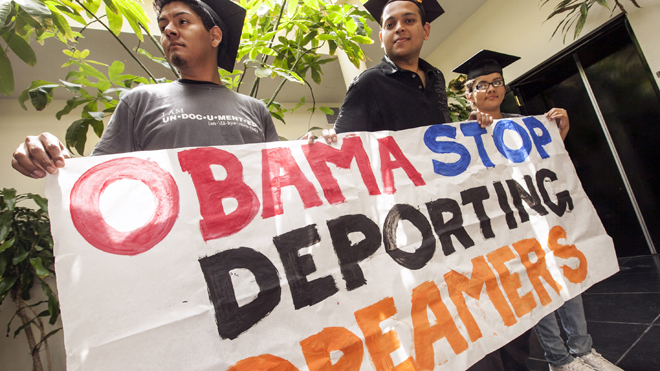
Immigration policy should make children a priority

The Obama administration has offered a temporary reprieve from deportation for up to 1 and 3/4 million immigrants who came to the United States as children.

Whatever the immediate merits of the Deferred Action for Childhood Arrivals, it signals a much broader principle all immigrant receiving countries should recognize: children experience migration differently than adults, and  public policy can create both great opportunity and great risks for their long-run capacity to become independent and successful adults.

Continue reading “Immigration policy should make children a priority”

Statistics Canada cuts long data short: another longitudinal survey is cancelled

The Survey of Labour and Income Dynamics died this morning.

The notice was given quietly by Statistics Canada: “This is the last release of longitudinal data from the Survey of Labour and Income Dynamics. Effective with next year’s release of 2011 data, only cross-sectional estimates will be available.”

A short, simple, and slightly obtuse, statement of a profound change for the user community and Canadians in general.

When I recently described the loss of a similar survey to a co-author over the telephone, she paused and said with sadness, “Ahhh…,” as if a friend had died.

There is no doubt that Statistics Canada also recognizes the value of this survey, and others like it. But there are important challenges in managing the information derived from so-called “longitudinal surveys”, and Canadians might be wondering whether or not they are being sold short.

Continue reading “Statistics Canada cuts long data short: another longitudinal survey is cancelled”

Why does health in early life matter?

Children are less healthy at birth when they are born to low income families, and their health in early life echoes into adulthood determining the chances of success and independence decades later.

It is well known that humble beginnings are a handicap, argues Janet Currie of Princeton University, but careful analysis is needed to understand the mechanisms and to appreciate the extent to which health status at birth causes longer run outcomes associated with success in adulthood.

Continue reading “Why does health in early life matter?”

The sad, sad story of the UNICEF Child Poverty Report and its critics

David Morely, UNICEF Canada’s Executive Director, has just issued a bold challenge. “It is clearly time for Canada to prioritize children when planning budgets and spending our nation’s resources, even in tough economic times,” says a press release announcing the publication of a report on child poverty.

In fact, the UNICEF Innocenti Report Card released today is the 10th in a regular series on child poverty in rich countries, each report hitting the headlines every second year or so.

Sadly, when it comes to discussions of child poverty kick-started by these reports there are two things that are not new: the conclusions; and the reaction of pundits and many policy makers. I say “sadly” because the two are not linked, and public policy discussion is not the better.

Continue reading “The sad, sad story of the UNICEF Child Poverty Report and its critics”

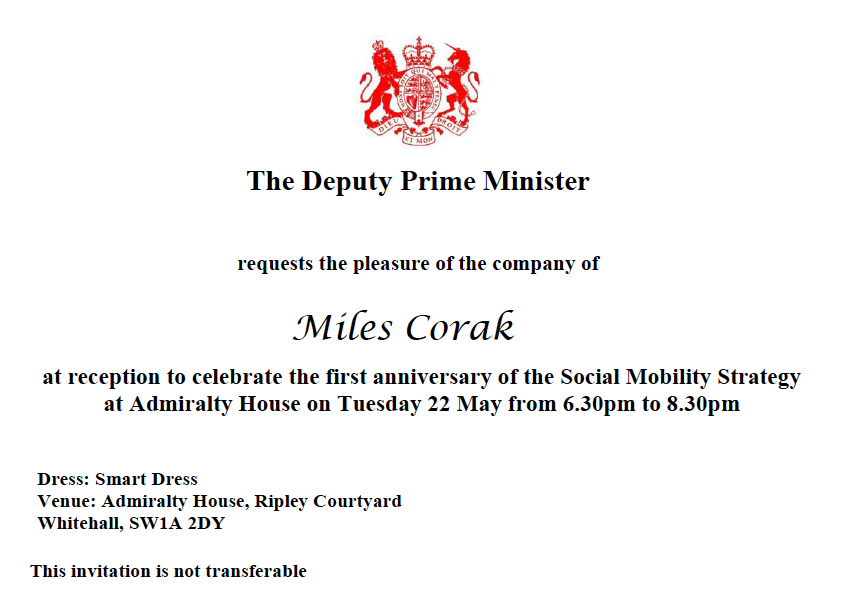
Social mobility and inequality in the UK and the US: How to slide down the Great Gatsby Curve

In a speech given this morning to announce an update on the government’s Strategy for Social Mobility, Nick Clegg, the Deputy Prime Minster of the United Kingdom, said that “We need an open society where people choose their place”; he said that “The effect of social class and class attitudes on Social Mobility are the ghost in the machine.”; and, in summary, he said that “We are a long distance from being a classless society”.

Yet in the same breath, he also said that it is a myth to suggest that reducing inequality will promote social mobility.

This is surely an inappropriate representation of the role of inequality in determining opportunity.

Continue reading “Social mobility and inequality in the UK and the US: How to slide down the Great Gatsby Curve”