American Economic Policy, as told by Martin Feldstein at Harvard University: Lecture 2, Where are we? How did we get here? What next?

Martin Feldstein American Economic Policy Harvard January 27 Lecture 2 Graphing Housing Prices

What caused the Great Recession, and could it happen again? These are the questions that motivate Martin Feldstein in the second lecture of his course “American Economic Policy” given to undergraduates at Harvard.

The good professor suggests that the housing sector is where we should look for an answer, and that we should appreciate that public policy played a role in both causing the recession, and in helping the American economy recover from it. But also important policy changes putting this sector on a more stable footing were reversed for political reasons, and this raises the risk that it could all go terribly wrong again.

Where are we? How did we get here? What next?

Continue reading “American Economic Policy, as told by Martin Feldstein at Harvard University: Lecture 2, Where are we? How did we get here? What next?”

American Economic Policy, as told by Martin Feldstein at Harvard University: Lecture 1, Introduction to Economics 1420

Martin Feldstein Harvard University“This is a remarkable year for studying economic policy in the United States.”
That is how Martin Feldstein began his course “American Economic Policy” for undergraduates at Harvard University. I’ve gone in cognito and hope all the 20 year olds will not notice me—well not really.

It is just one of several courses I’ll audit this spring semester, and besides it was not too hard to hide in the overflowing room, standing room only at least for this first day of class.

Feldstein is a player in US economic policy. The biography on his website says:

From 1982 through 1984, Martin Feldstein was Chairman of the Council of Economic Advisers and President Reagan’s chief economic adviser. He served as President of the American Economic Association in 2004. In 2006, President Bush appointed him to be a member of the President’s Foreign Intelligence Advisory Board. In 2009, President Obama appointed him to be a member of the President’s Economic Recovery Advisory Board.

Since I am slated to teach a similar course at the University of Ottawa next year after my academic leave is over, it makes sense to see how the Harvard professor handles the big macro-economic issues of our time. So every Monday, Wednesday, and Friday morning it is back to undergraduate economics for me, and I’ll post my edited class notes if you want to follow along, learn some macro-economic theory, and develop an appreciation of the economic challenges facing the United States (and presumably other rich countries).

During the first class Professor Feldstein posed the big questions and issues the course will tackle, as well as laying out some of the administrative  ground work.

Are Canadian progressives showing Americans the way?

Reflecting on the recent outcome of the Canadian election, in which the Liberal Party of Canada cast itself as a progressive left of center party and reversed its fortunes in a major way to win a strong majority government, Larry Summers wrote in the Washington Post that “More infrastructure investment is not just good economics. It is good politics. Let us hope that American presidential candidates get the word!”

Anyone who has heard Mr. Summers speak over the course of at least the last five years will be familiar with his message, that he can’t imagine a better time—with historically low interest rates, lower wages, and higher unemployment—to be investing in the country’s infrastructure. Just when would be a better time to revamp Kennedy airport, and the nation’s roads, bridges, and dams, than now?

Paul Krugman echoes the same sentiment in a New York Times column entitled, somewhat inappropriately, “Keynes Comes to Canada.”

Good economics it is, and not simply for pump-priming reasons in the old Keynesian way. If there is a rock solid case to be made for productivity improving public investments, it should be made regardless of the state of the macro-economy.

But as the obvious frustration in the tone of Mr. Summers’ voice suggests, the fact that his advice does not lead to policy, suggests good economics doesn’t always line up with good politics. And there are a number of peculiarities in both personalities of political leaders, and the structure of politics, suggesting the Canadian example does not automatically translate to the American setting.

Continue reading “Are Canadian progressives showing Americans the way?”

How to think about “think” tanks

Kady O'Malley Tweet on Think Tanks 1

It is sometimes said that think tanks are good for democracy; indeed the more of them, the better. If there are more ideas in the public arena battling it out for your approval, then it’s more likely that the best idea will win, and that we will all have better public policies. But intuitively many of us have trouble believing this, have trouble knowing who is being truthful, and don’t know who to trust.

This battle of ideas, studies, and statistics has the potential to make many of us cynical about the whole process, and less trusting of all research and numbers. If a knowledgeable journalist like the Canadian Kady O’Malley expresses a certain exasperation that think-tank studies always back up “the think-tank’s existing position,” what hope is there for the rest of us? A flourishing of think tanks just let’s politicians off the hook, always allowing them to pluck an idea that suits their purposes, and making it easier to justify what they wanted to do anyways.

Maybe we shouldn’t be so surprised that think tanks produce studies confirming their (sometimes hidden) biases. After all this is something we all do. We need to arm ourselves with this self-awareness. If we do, then we can also be more aware of the things in a think tank’s make-up that can help in judging its credibility, and also how public policy discussion should be structured to help promote a sincere exchange of facts and ideas.

Continue reading “How to think about “think” tanks”

How much confidence should we have in the job numbers?

normal_curve

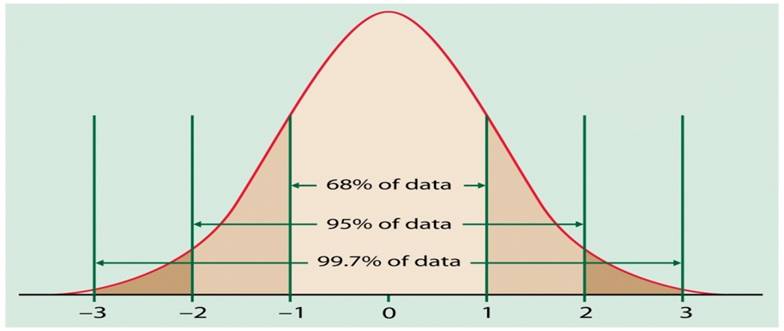
Statistics Canada reported that employment rose by 51,000 in February.

These numbers seem to gyrate tremendously from month to month in a way that has little to do with economic fundamentals: jumping by 40,000 in December, falling by 22,000 in January, and now rising significantly.

How much confidence should we have in them?

Continue reading “How much confidence should we have in the job numbers?”