Building a more inclusive society requires a conversation about inequality

[ This post is based on the opening address I gave on the invitation of the New Zealand Treasury to the “A More Inclusive New Zealand Forum” held in Wellington, New Zealand on July 27th, 2015. ]

I would like to open this gathering with a statement of admiration for both its content, and its process. The organizers have asked us to deliberate on “inclusion”, and to do so through conversation.

As a part of my contribution to this conversation I would ask you to consider four major messages, all four of which revolve around the question: What does inclusion mean?

I use “mean” in the sense of how we define inclusion, and “mean” in the sense of its implications for policy.

What does “inclusion” mean, and how can we give it enough precision to inform public policy?

My four messages are:

  1. an inclusive society means that all children can become all that they can be;
  2. an inclusive society seeks to eliminate child poverty;
  3. income inequality has the potential to erode inclusion;
  4. public policy must address many dimensions of inequality.

 

A More Inclusive New Zealand Forum

Continue reading “Building a more inclusive society requires a conversation about inequality”
Should children vote? I argue that there are reasonable ways to give children the vote in an interview with CBC radio

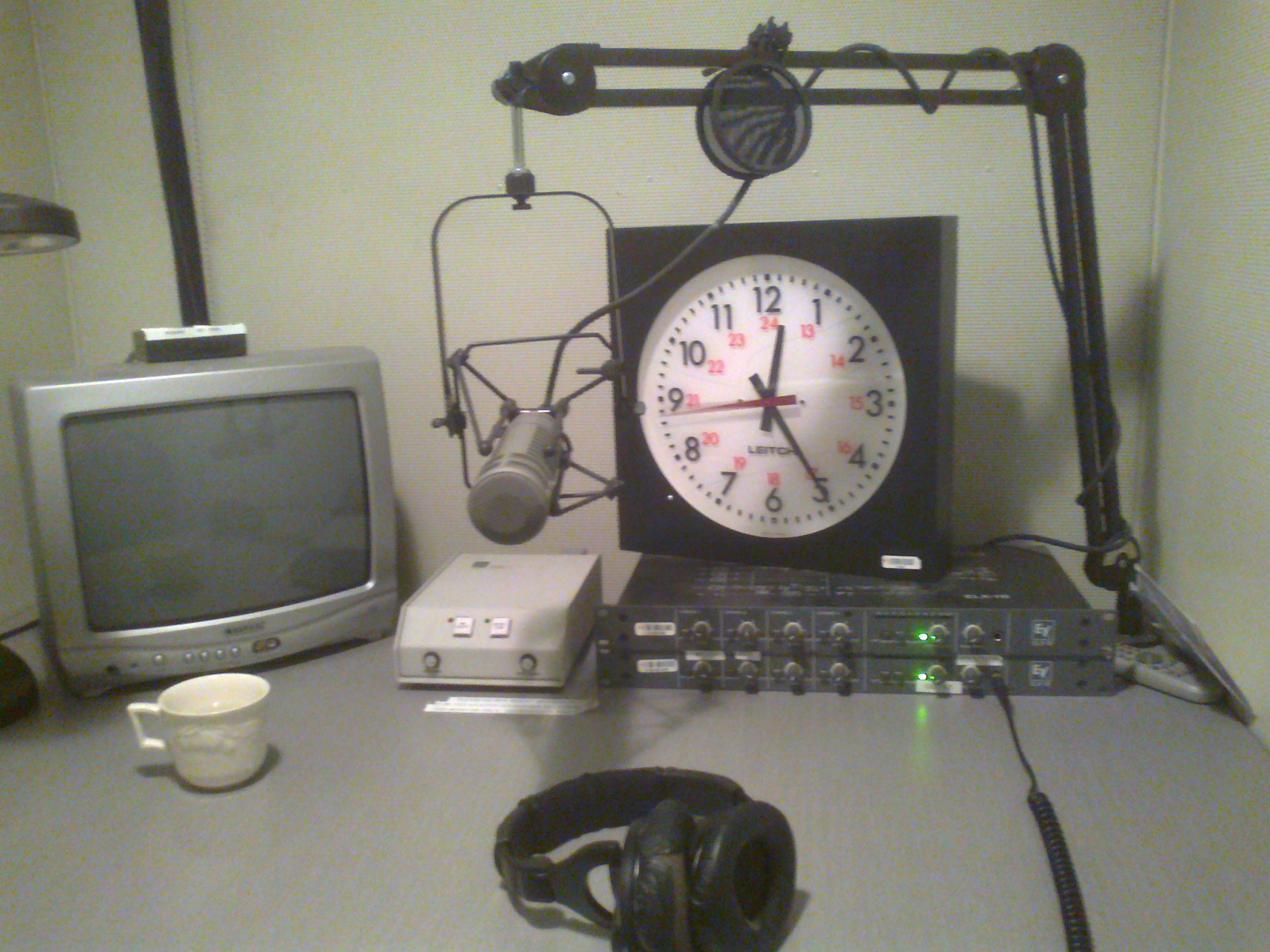
Sound booth at the CBC Studio in Ottawa
This is the view inside the sound booth at CBC Ottawa where I did a radio interview for the program “The 180”. (The cup of water is mine!)

I make the case for giving children the vote in a radio interview broadcast on the CBC program “The 180”. The show is hosted by Jim Brown, whose subtle style and empathy with both me and his listeners is really quite impressive. Here is a link to the eight minute interview.

Matthew Lazin-Ryder, a producer on the show, nicely summarizes the main points on the program web page, but if you want more background on the voting scheme I describe—which involves giving custodial parents an extra vote for every child under their guardianship, and which is called Demeny Voting—check out the following posts.

  1. How to give children the vote
  2. Citizenship as a privilege or as a right? Should children be given the vote
  3. Should children be given the vote? Watch this TEDx talk

In fact, Demeny voting has a Wikipedia page, and you can get references to some of the underlying sources there as well as from the first of the above posts, which also points out that Paul Demeny (after whom the scheme is named) did an interview with CBC Radio in 2011.


UNICEF gives Canada a passing grade, child poverty actually fell during the recession … or did it?

UNICEF Children of the Recession Innocenti Report Card 12 CoverLet’s see if we can make sense of this.

UNICEF has just given Canada a passing grade, mind you barely a pass, when it comes to the fight against child poverty. In a report released today it claims that 21% of Canadian children live in poverty, nothing to brag about, but at least this is lower than the 23% who were poor just before the recession started in 2008.

Interestingly, Statistics Canada also says child poverty is down, but that only 8.5% of kids are poor. However, at the same time it says child poverty is up, reaching almost 14%. And finally, if this is not confusing enough, it says that, yes, 14% of kids are poor, but this is down since 2008.

Up or down? One-in-five kids poor, or one-in-seven, or maybe even as few as only one-in-eleven?

Continue reading “UNICEF gives Canada a passing grade, child poverty actually fell during the recession … or did it?”

UNICEF reports that child poverty in the US was held in check during the Great Recession

UNICEF Children of the Recession Innocenti Report Card 12 CoverIt is an understatement to say that the US welfare reforms of the 1990s were intended to give a little spring to the social safety net.

The intention was much more radical, involving a major make-over of income support, and turning what was imagined as a net ensnarling many Americans behind a welfare wall, into a trampoline, a springboard that would incentivize work and allow them to ride a wave of prosperity to higher incomes that would lift their children out of poverty.

But this is hardly what is needed when times turn bad.

The only virtue of a trampoline when employment falls by more than 8 million, when the unemployment rate more than doubles, and when median incomes drop by over $10,000, is that it catches you on the way down.

American families needed a safety net during the Great Recession, and a report released by UNICEF on child poverty suggests, surprisingly enough, that is exactly what they got.

The rate of child poverty, in spite of all the macroeconomic turbulence of the last six years, has hardly budged. This is in large measure because of discretionary policy changes on the part of the Federal government that quickly turned the clock back to the welfare system of the 1980s.

Continue reading “UNICEF reports that child poverty in the US was held in check during the Great Recession”

The two (irreconcilable?) states of the Union

sotu_slide_audience

When President Obama approaches the podium to deliver his State of the Union address he will have two past presidents looking over his shoulders.

Lyndon B. Johnson who in 1964 declared a “War on Poverty”, and Ronald Reagan who in 1986 surrendered victory with the claim that “… poverty won the war. Poverty won in part because instead of helping the poor, government programs ruptured the bonds holding poor families together.”

President Obama will surely celebrate Johnson for initiating the War on Poverty fifty years ago this month, but to advance his agenda he will also stress that government programs are a force for the good.

Continue reading “The two (irreconcilable?) states of the Union”

America’s children are the silent victims of the Great Recession

Children at risk a red and green water colour

The Great Recession has disrupted the lives of families and their children in an unprecedented way.

It has changed everyday life in some ways that can be measured by money, but in others that cannot, and at the extreme it has even led to a six-fold increase in the risk children will be physically abused.

Lost jobs, falling incomes, and foreclosures will likely compromise the capacity of children to become all that they can be, with the effects of the recession echoing not just across years, but also across generations.

Continue reading “America’s children are the silent victims of the Great Recession”